Tiered Reward Systems Altering Dynamics in Mobile Live Table Gaming
Written by Kai Berger · Oct 10, 2026
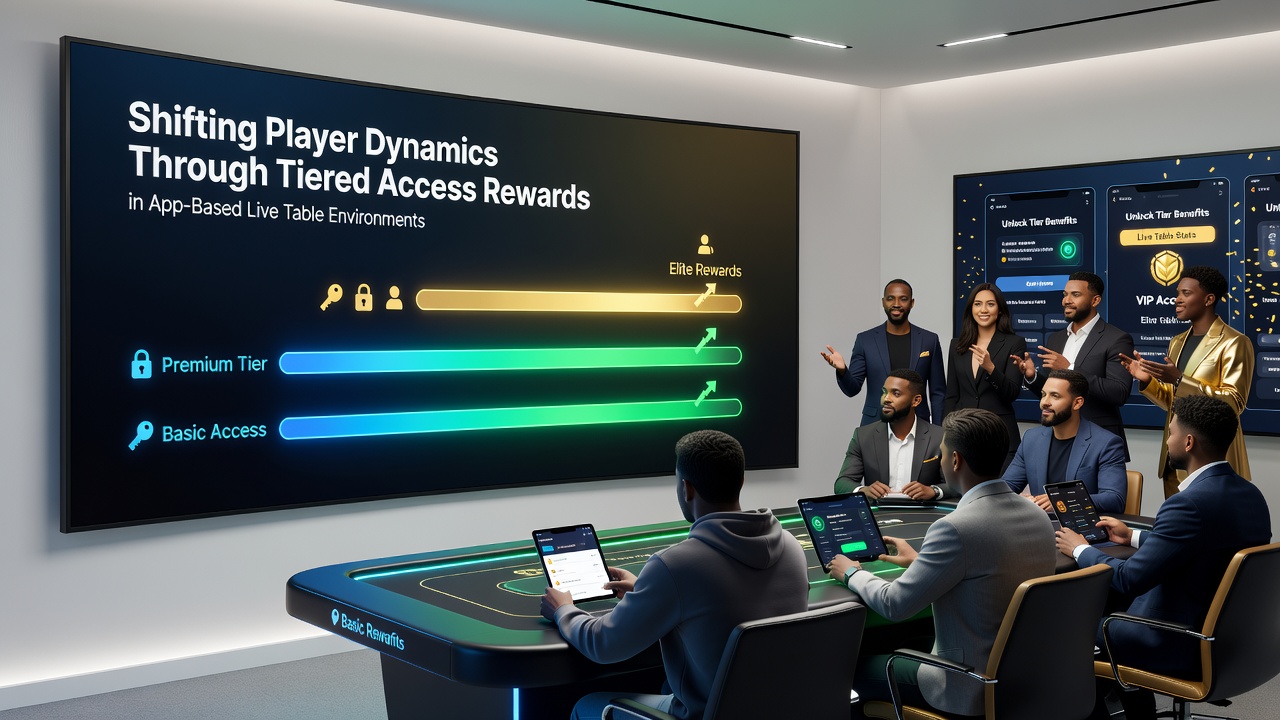
Tiered Reward Systems Altering Dynamics in Mobile Live Table Gaming
App-based live table environments have incorporated tiered access rewards as a core mechanism for structuring player participation, and data from industry reports indicates these systems influence retention rates alongside session durations across various platforms. Players progress through defined levels that unlock specific advantages such as priority entry to dealer tables, reduced latency in game streams, and exclusive variants of blackjack or roulette not available at base tiers. According to figures compiled by the Nevada Gaming Control Board, similar loyalty frameworks in regulated markets have correlated with measurable increases in average player spend when access restrictions tighten at higher levels.
Operators deploy these models through algorithmic tracking of metrics including wager volume, frequency of logins, and interaction with live dealer features. Those who reach mid-tier status often gain invitations to private rooms where table minimums adjust dynamically, while top-tier participants receive dedicated support channels that facilitate faster resolution of account queries during peak hours. Research from the University of Nevada Reno's gaming studies division shows that such layered incentives can shift participation patterns, with lower-tier users extending sessions to qualify for upgrades and higher-tier users maintaining consistent activity to preserve status.
Mechanics of Tier Progression in Live Dealer Apps
Progression typically relies on cumulative activity tracked in real time, and points accumulate from bets placed on streamed tables while multipliers apply during promotional windows. In October 2026 several platforms adjusted their point accrual formulas to account for regional regulatory updates, which resulted in revised thresholds for advancing between levels. This adjustment led to observable migrations where players consolidated activity on fewer apps to accelerate tier climbs rather than spreading wagers across multiple environments.
Access rewards at each stage include elements like reserved seating at popular dealer tables during high-traffic periods, customized camera angles for immersive viewing, and integration with in-app chat functions that connect directly to specialized hosts. Data compiled by the Canadian Gaming Association reveals that platforms implementing these features experienced retention improvements of 18 to 24 percent among users who crossed into the second tier within their first month of enrollment.
Observed Changes in Player Behavior Patterns
Analyses of app telemetry indicate that tiered structures prompt users to adjust timing of their participation, often aligning logins with events that offer bonus point multipliers. Mid-level participants, for instance, demonstrate higher rates of return visits on days when exclusive table access opens, whereas base-level users show increased trial of new game variants in attempts to earn initial advancement. Observers note that these dynamics create feedback loops where visible progress indicators encourage sustained engagement without direct prompting from the platform itself.

Geographic variations appear in how these systems perform, with European operators reporting stronger uptake among users aged 25 to 35 compared to North American counterparts where older demographics respond more readily to status-based privileges. A joint study released by the Australian Institute of Criminology and several academic partners examined cross-border app data and found that tiered access correlates with reduced churn when reward visibility remains high within the interface design.
Regulatory Context and Platform Adaptations
Regulators in multiple jurisdictions have begun examining how tiered rewards intersect with responsible gaming protocols, and guidelines issued in late 2025 prompted several operators to introduce spending caps tied to tier status. These caps limit the rate at which points convert into access benefits, thereby moderating potential overextension. Platforms responded by embedding educational prompts that surface when users approach tier thresholds, displaying factual summaries of historical spend data for that account.
Industry organizations such as the European Gaming and Betting Association have documented cases where tiered models integrate with third-party verification tools that monitor play patterns across sessions. This integration allows for automated adjustments to reward pacing when predefined risk indicators trigger, maintaining compliance while preserving the structural incentives that drive user movement between levels.
Conclusion
Tiered access rewards continue to evolve within app-based live table settings, and available data points to measurable effects on participation rhythms and retention metrics across regulated markets. Operators refine these frameworks in response to both player feedback loops and external regulatory signals, resulting in systems that balance exclusivity with controlled progression pathways. Continued monitoring by academic and governmental bodies will track how these mechanisms adapt through 2027 and beyond, particularly as mobile streaming technology advances and new table formats enter circulation.